
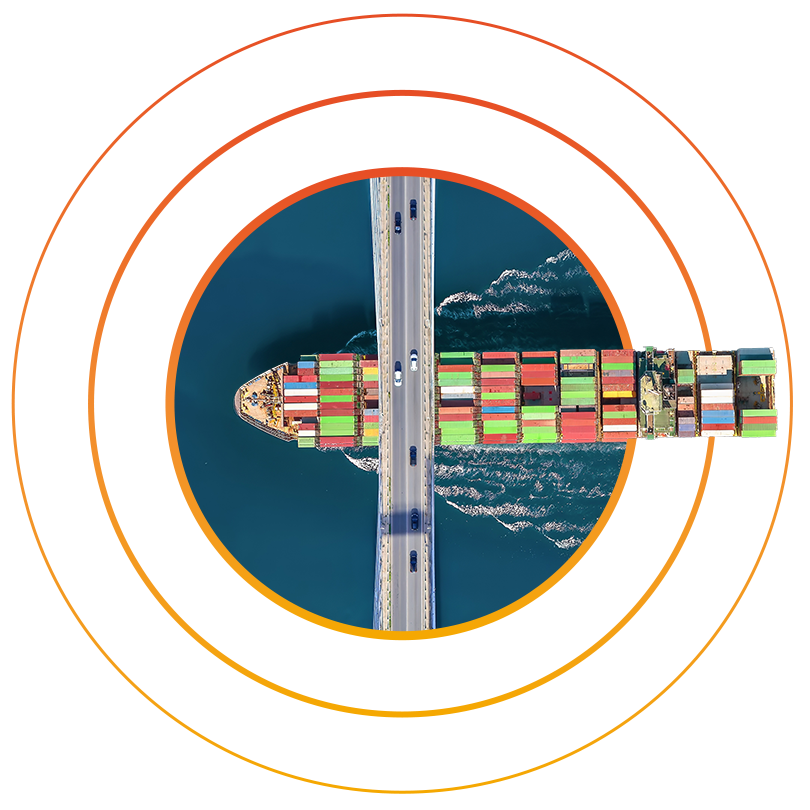





SCAC for Maritime and Intermodal Operations
If you operate in ocean freight, port logistics, or intermodal transportation, a Standard Carrier Alpha Code® (SCAC™) may be required for documentation, tariffs, and system integration.
Apply for your SCAC and ensure your carrier identification aligns with industry and regulatory requirements.

Identity verification currently applies to non-Class 8 carriers only, at this time.
Where SCAC is Commonly Used in Maritime
SCAC may be used for:
-
Port and terminal workflows
-
Intermodal documentation and EDI transactions
-
Partner system integrations that require standardized carrier IDs
-
Cross-border and multi-mode visibility processes
-
Tariff publications
If you operate in U.S. foreign commerce or connect to systems that require a standardized carrier ID, you may need a SCAC.
Even if you operate vessels (VOCC) and do not require an FMC license, system integrations may still require a SCAC. Apply at scaccode.com.
FMC Licensing vs SCAC: What's the Difference?
A SCAC is issued by NMFTA and serves as a standardized carrier identifier.
FMC licensing or registration is regulated separately by the Federal Maritime Commission (FMC).
Based on FMC guidance:

You May Need an FMC License or Registration If You Are:
- A U.S.-based NVOCC (Non-Vessel-Operating Common Carrier)
- An OTI (Ocean Transportation Intermediary)
- A foreign-based NVOCC electing registration or licensure
These entities must meet financial responsibility requirements and publish tariffs.
You Do NOT Need an FMC License If You Are:
- A VOCC (Vessel-Operating Common Carrier) operating your own ships
- A domestic (Jones Act) carrier operating only within U.S. coastal/inland commerce
- A company not operating in U.S. foreign commerce
- An agent that does not issue its own House Bill of Lading
VOCCs are regulated but not licensed. They must publish tariffs and comply with FMC regulations if operating in U.S. foreign commerce

Why Does This Matter for SCAC?
Whether licensed, registered, or regulated, maritime and intermodal entities frequently require a SCAC for:
- Tariff filings
- Bill of lading systems
- Port authority requirements
- Customs and EDI integrations
- Intermodal rail and drayage coordination
If you are unsure of your regulatory status, consult the FMC directly at fmc.gov.
If your operations require a carrier code, you can apply for a SCAC at scaccode.com.
What You'll Need to Apply for a Maritime SCAC
Apply online
Provide company operating details
Confirm your role
(VOCC, NVOCC, OTI, Intermodal Operator, etc.)
Receive your SCAC once approved
Your SCAC can then be used for tariff publication, port systems, and electronic documentation.
Identity verification currently applies to non-Class 8 carriers only, at this time.
New ID Verification Requirement for Non-Class 8 Carriers
At this time, identity verification requirements apply to certain motor carriers.
Maritime carriers (VOCCs), OTIs, and most intermodal operators are not subject to the motor carrier identity verification requirements.
If your organization operates motor carrier equipment in addition to maritime services, please review the identity verification guidance.
Not Sure If You Need a SCAC?
Understanding whether you need a SCAC, an FMC license, or both can be confusing, especially in multi-modal operations. Review our FAQs below or contact our Client Services team for assistance.
Got Questions?
-
Many maritime, port, and intermodal workflows use SCAC to identify carriers and transportation service providers. Whether a SCAC is required depends on the systems, partners, or port operations you work with. If a port authority, terminal operator, platform, or logistics partner requested a SCAC, you will need to apply.
-
In maritime and intermodal environments, SCAC is commonly used to:
- Identify carriers in port and terminal systems;
- Support intermodal freight movement and documentation;
- Enable standardized carrier identification across ocean, rail, and truck modes; and
- Align carrier records across multiple logistics platforms.
SCAC provides a consistent identifier across complex, multi-party workflows.
-
No. A SCAC is not the same as a Federal Maritime Commission (FMC) number or a vessel operator identifier. SCAC is a carrier identification code used across logistics and transportation systems, while FMC numbers and vessel identifiers serve different regulatory and operational purposes.
Some organizations may require multiple identifiers depending on the type of operation.
-
Many intermodal operators are required to have a SCAC when working across systems that rely on standardized carrier identifiers. This is especially common when freight moves between maritime, rail, and over-the-road (OTR) transportation.
-
No. A SCAC does not certify, license, or approve a company to operate. It is an identification code used to recognize carriers across systems and workflows.
Operational authority, licensing, and compliance requirements are governed separately.
-
At this time, identity verification requirements depend on the carrier type. Some maritime and intermodal operations may fall under non-Class 8 carrier requirements, while others may not.
If identity verification is required for your application, this will be clearly communicated during the application process.
-
In most cases, a SCAC can be issued shortly after the application is completed and any required steps are successfully finished. Processing time may vary depending on application accuracy and completeness.
-
SCACs are issued on an annual basis and must be renewed each year to remain active, regardless of transportation mode. You can renew your SCAC at https://scaccode.com/renew-check-status
-
SCACs are issued and governed exclusively by the National Motor Freight Traffic Association, Inc.® (NMFTA)™, the official SCAC issuing authority.
-
If a partner, port, or platform requested a SCAC and you’re unsure which category applies, the fastest path is to start the application and select the option that best matches your operation. Support resources are available if you need assistance.
Related Resources for Maritime & Intermodal Operators
Not Sure If You Need a SCAC?
Maritime operators, NVOCCs, VOCCs, and intermodal providers all have different regulatory requirements. This quick guide helps you determine whether your operation requires a SCAC—and why.
Verify Carrier Identity with SCAC Verified
Once your SCAC is issued, ensure it displays correctly and isn’t being misused. SCAC Verified helps shippers, brokers, and partners confirm carrier identity and reduce impersonation risk.
Understanding ID Requirements
Identity verification applies to certain motor carriers, not most maritime operators. Learn who must complete verification and what it means for your operation.